

The biggest difference between flaskless molding and flask molding is how each holds and supports the sand mold when casting. You should know these differences to make good choices for your factory work.
Flaskless molding lets you make things faster and with better size accuracy.
You can get more work done and spend less on workers by using machines.
Better sand use means fewer mistakes and higher casting quality.
Key Takeaways
Flaskless molding is quicker and more exact than flask molding. It works well for making many parts at once.
Machines help with flaskless molding. This lowers worker costs and makes work faster. One person can watch over many molds.
Flask molding is better for special or big castings. It lets you make different designs and tricky shapes.
Flaskless molding needs less room. It also keeps the work area cleaner by cutting down on dust and noise.
Both ways have good points. Use flask molding for small jobs. Use flaskless molding for making lots of parts.
Handling sand the right way is important for both methods. This helps make good castings with fewer mistakes.
Buying flaskless molding machines costs more at first. But it can save money over time.
Think about what your factory needs and how much you can spend. This will help you pick the best molding process.
1. What Is Flask Molding?
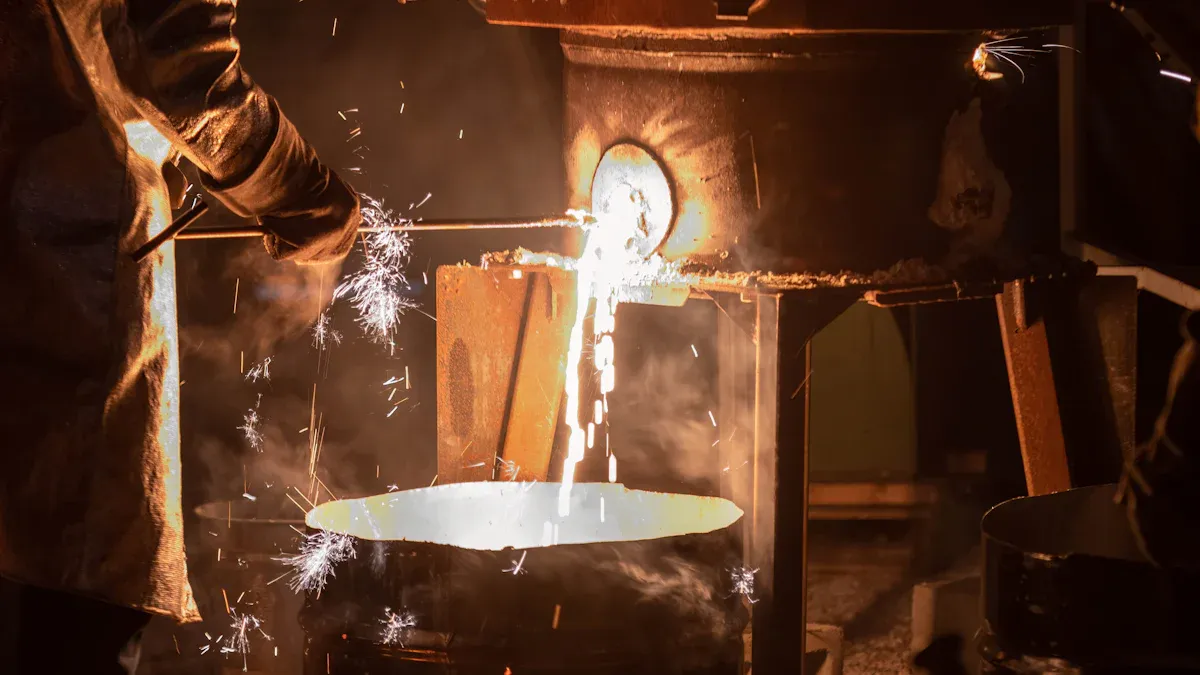
Process Overview
Flask molding stands as one of the oldest and most reliable methods in metal casting. You use a flask to hold and support the sand mold during the casting process. This technique dates back to the early 1700s, when Abraham Darby introduced the first true foundry flask. Before this innovation, craftsmen relied on crude box frames or pattern boards tied together, which made the process less efficient and less precise.
Key Steps
You can follow these steps to complete a traditional flask molding process:
Place the drag part of the flask upside down on the ram-up board.
Position the drag pattern with the parting surface down and add gating and risering pieces.
Riddle facing sand onto the pattern and hand pack it around.
Add backing sand and ram it uniformly.
Strike off excess sand to create a smooth surface.
Place the bottom board and ensure solid contact with the drag sand.
Clamp the drag section and turn it over, then clean the mold face.
Sprinkle parting material over the mold joint and pattern.
Set the cope on the drag and pack facing sand into the cope.
Add gaggers as necessary and fill the cope with sand, ramming it uniformly.
Vent the cope and remove it from the drag to draw the cope pattern.
Inspect and clean both cope and drag, ensuring no loose sand remains.
Set cores in place and close the mold carefully using pins.
Tip: You should inspect both cope and drag before closing the mold. This step helps you avoid defects in the final casting.
Main Features
You use a flask, which consists of two main parts: the cope (top) and the drag (bottom).
The flask keeps the sand mold stable and aligned during pouring.
You can create molds for both simple and complex shapes.
This method works well for small batches and custom parts.
Equipment Used
Types of Flasks
You will find several types of flasks in flask molding. Each type has unique material properties and shapes.
The jeweler’s casting flask is a specialized tool for small, detailed work.
Most flasks have pins or guides to ensure proper alignment.
Sand Handling
You must handle sand carefully to achieve strong and accurate molds.
Moisture Control: Maintain the right moisture content for optimal sand temper. Too much moisture weakens the mold. Too little causes instability.
Compactability: Compact sand properly using ramming or squeezing. This step improves mold strength and surface finish.
Additives: Add bentonite clay for better cohesion. Use coal dust to reduce surface defects.
Note: Proper sand handling helps you produce high-quality castings with fewer defects.
You can see that flask molding relies on careful preparation and precise equipment. This method gives you flexibility and control, especially for custom or low-volume production.
2. What Is Flaskless Molding?
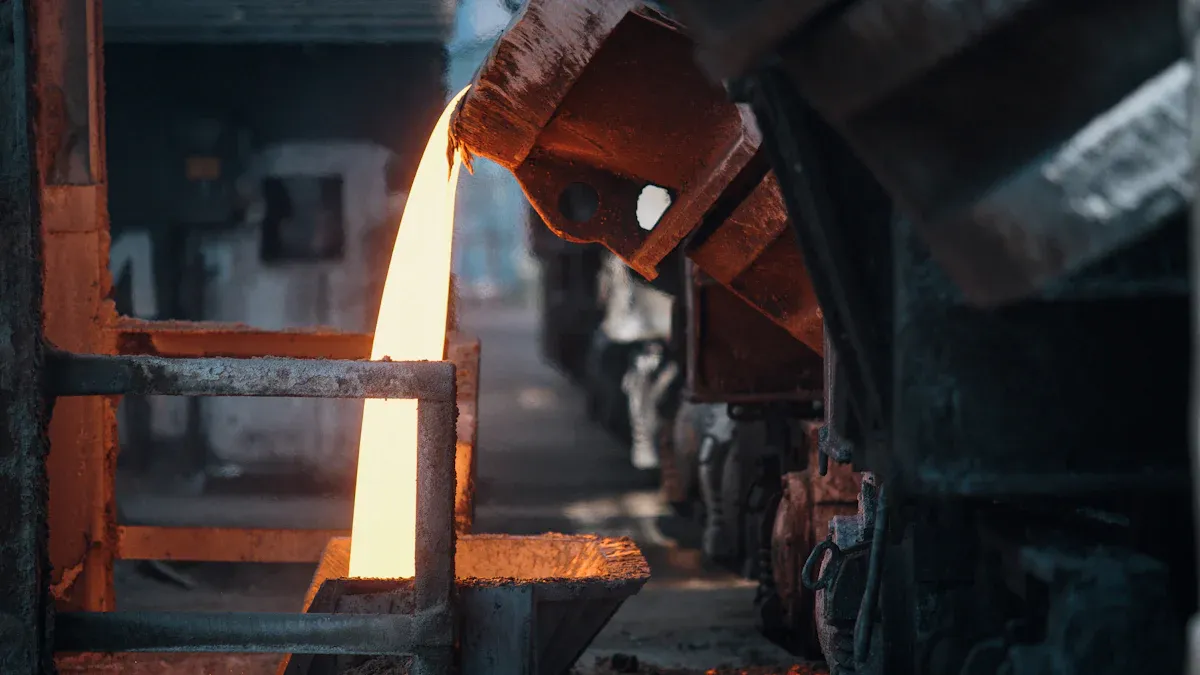
Flaskless molding is a newer way to do sand casting. You do not need traditional flasks to hold the mold. Instead, you use strong sand and special mold boxes or frames. Machines shape and press the sand, so the work goes faster and stays the same each time.
Flaskless Molding Process
Automation
You get lots of help from machines in flaskless molding. Machines do most of the work, so you do not have to lift or clean heavy flasks. Big systems like DISA and Hunter can make up to 550 molds every hour. Only one person needs to watch the machines. This means you can make more molds with fewer workers. Old flask molding makes only 90 to 120 molds each hour and needs more people. Machines also make your workspace safer by cutting down dust and noise.
Mold Box/Frame Use
In flaskless molding, you use a mold box or frame instead of a hard flask. The machine presses sand onto a pattern plate. This makes a strong and exact mold without extra steps. The sand mix has sand, clay, water, and other things to help the mold stay strong and smooth. You can make tricky shapes with better size accuracy because the process stops the mold from bending.
Tip: Check your sand mix often to keep mold quality high and avoid mistakes in casting.
Equipment and Setup
Molding Machines
Flaskless molding uses machines that work by themselves. These machines use special computers called PLCs to run smoothly and safely. They can make many kinds of parts, like car pieces, pipes, valves, and covers. Companies such as Quanzhou Juneng Machinery Co.,Ltd. sell these advanced machines. Their machines help you make lots of molds that all look the same. You also save space because these machines are smaller than old setups.
Sand Compaction
You make strong molds in flaskless molding by pressing a green sand mix. The machine squeezes the sand into a hard block that keeps the pattern’s shape. You can use up-and-down or side-to-side pressing, depending on your machine. The sand mix has extras that help the mold look smooth and stay strong. Pressing the sand the same way each time makes sure every mold is good.
You can see that flaskless molding gives you speed, better accuracy, and saves money. This way works well for making lots of parts and tough shapes, so it is great for modern factories.
3. Flaskless Molding vs Flask Molding
Process Comparison
Mold Creation
There are big differences in how molds are made. Flask molding uses a flask to hold the sand. Flaskless molding uses strong sand and a good pattern design. Flask molding needs people to do many steps by hand. You have to handle, flip, and clean the flask. Flaskless molding uses machines to press and push out molds in one step. This makes things faster and the results stay the same each time.
Sealing Area
You need to watch the sealing area in both ways. Flask molding uses the flask to keep mold halves together and sealed. If you do not do this right, the halves can move and cause mistakes. Flaskless molding uses machines to press the sand tightly. This keeps the mold lined up and helps stop problems.
Equipment Differences
Flasks vs Frames
Flask molding needs a flask for every mold you make. Flasks cost more money and slow down how fast you work. Flaskless molding does not use flasks. It uses mold boxes or frames to shape the sand. This change saves money and makes things go quicker.
Automation Level
Flaskless molding uses more machines and smart controls. Brands like Quanzhou Juneng Machinery Co.,Ltd. make machines with special features. These features help you find problems and keep things working. Flask molding needs more people to do the work by hand. This makes it slower and costs more.
Flaskless molding machines use smart controls and automation.
You need fewer workers to run these machines.
Flask molding needs more people and more watching.
Application Range
Both methods are used in many places. Each one is good for different jobs. Flask molding is best for big, heavy castings made in small amounts. Flaskless molding is great for making lots of small or medium parts. You see flaskless molding in cars, machines, building, and things people use at home.
Tip: Use flask molding if you want custom shapes. Use flaskless molding for fast, steady, and big production.
4. Pros and Cons
Flask Molding Advantages
Flask molding has many good points:
Enhanced Production Efficiency
You can make things faster. This helps you keep working without stopping.Cost-Benefit Optimization
You use less material and energy. Over time, you save more money.Improved Product Quality
Your castings are strong and even. This matters when you need parts that work well.Adaptability to Diverse Materials
You can use different materials. You can also change the process for special jobs.Simplified Maintenance and Support
The design is simple. This makes fixing problems quick and easy.
Tip: Flask molding is good for single items, small groups, and big castings. You can use it for custom work.
Flask Molding Disadvantages
There are some problems with flask molding:
High Material Costs
Phenolic resin is expensive. Even a little costs a lot.Large Initial Investment
You need to spend more money at first. Equipment and setup cost a lot.Porosity and Shrinkage Issues
Your parts may have holes or shrink. This can lower the quality.Extra Post-Processing
You may need more work after casting. Even if the surface looks good, you still need to finish it.Labor-Intensive Process
You need more people if you do not use machines. This can slow you down and cost more.
Note: Flask molding is best for small amounts or big parts. It is not great for making lots of things at once.
Flaskless Molding Advantages
Flaskless molding has many benefits:
You get molds that match your design every time. Machines press sand evenly for better results.
You do not need as many workers. This keeps things moving and saves time.
You waste less sand and get more good parts. This saves money and helps the planet.
Your workspace is safer and cleaner. Machines keep dust and noise low.
You save money over time. Machines help you make more parts and spend less.
Sand molding machines from Quanzhou Juneng Machinery Co.,Ltd. help you make molds that are strong and the right size. You can make more molds faster, so you fill orders quickly.
Flaskless molding machines give you speed and flexibility. You do not need hard frames, so you can change jobs fast. This helps your factory handle new work easily.
Tip: Pick flaskless molding for fast, steady, and big production of small or medium parts.
Flaskless Molding Disadvantages
Flaskless molding has many good points, but there are also some problems you should think about before picking it for your foundry. Here are the main disadvantages you might face:
High Initial Investment
You have to pay more money at the start to get flaskless molding machines. These machines use new technology and work by themselves. The price is often higher than old flask molding setups. If your foundry is small or you do not have much money, this can be hard.Mold Size Restrictions
Flaskless molding is best for small and medium castings. If you want to make very big parts, this method may not work well. The machines can only make molds up to a certain size. This can be a problem if you need to make large castings for some industries.Complex Maintenance and Repairs
You need to take care of flaskless molding machines often. The machines are more advanced, so fixing them can take more time and cost more money. You might need workers with special skills to fix problems. If a machine stops working, you could lose time making parts.Less Flexibility for Custom Jobs
Flaskless molding is great for making the same part many times. If you need to change patterns a lot or make special shapes, this way is not as flexible. Changing the setup can take longer and may not be good for small jobs or test parts.Dependence on Consistent Sand Quality
You must use good sand with the right mix of clay and water. If the sand mix changes, your castings might have problems. Machines from Quanzhou Juneng Machinery Co.,Ltd. help keep sand quality steady, but you still need to check it often.
Here is a quick look at the main limits you should know:
Note: If you want to make big, special, or just a few castings, flaskless molding might not be the best choice. Think about the higher cost and care needed, and compare it to the speed and steady results you get.
You should think about what you need to make, how much money you have, and what kinds of parts you want to produce. This will help you see if flaskless molding is the right pick for your factory.
5. Best Uses and Decision Guide
When to Use Flask Molding
Pick flask molding if you want more control and flexibility. This way works best for special jobs or when you need to change things. Here are some good times to use it:
Custom or One-Off Castings
If you need a special part or just a few, flask molding is a good choice. You can switch patterns and sand mixes without trouble.Large or Heavy Castings
When you make big machine parts, the flask holds the heavy sand mold steady. This keeps your mold from breaking or moving.Complex Shapes or Cores
If your part has a hard shape or deep holes, flask molding helps. You can fix the mold by hand to get the shape right.Low to Medium Production Volumes
If you do not need thousands of parts, this method fits. It works well for small shops or places that do not make a lot.
Tip: Flask molding is great if you want to try new ideas or test different materials. You can change things easily and see what works best.
When to Use Flaskless Molding
Choose flaskless molding if you want to work fast and make many parts. This way is best when you need the same part over and over. Here are some times to use it:
High-Volume Production
If you need lots of parts quickly, flaskless molding is best. Machines like those from Quanzhou Juneng Machinery Co.,Ltd. can make hundreds of molds each hour.Small to Medium-Sized Castings
This method is good for car parts, pipes, valves, or hardware. The machines work best with these sizes.Repeatable, Standardized Parts
If you want every part to be the same, use flaskless molding. Machines keep the quality steady every time.Limited Labor or Space
If you have fewer workers or not much room, this method helps. Machines save space and do most of the work for you.Cleaner and Safer Work Environment
If you want less dust and noise, flaskless molding is a good pick. Machines help keep your shop clean and safe.
Note: Flaskless molding is smart if you need to fill big orders fast and want fewer mistakes.
Quick Reference Table
Here is a simple table to help you pick the right process:
Reminder: Always pick the molding process that matches your goals, part size, and budget. The right choice saves you time, money, and effort.
You have learned how flaskless and flask molding are different.
Flask molding lets you make special or big castings easily.
Flaskless molding helps you make lots of parts fast and with good accuracy.
Pick the right process for your project to get the best results.
If you want more details or need new machines, look at Quanzhou Juneng Machinery Co.,Ltd.
FAQ
1. What is the main difference between flask and flaskless molding?
You use a flask to hold the sand mold in flask molding. Flaskless molding uses strong sand and a mold box, not a flask. Machines shape the mold for you.
2. Which method gives you better accuracy?
Flaskless molding gives you better accuracy. Machines press the sand evenly. You get parts that match your design every time.
3. Can you use flaskless molding for large castings?
You cannot use flaskless molding for very large castings. The machines work best for small or medium parts. For big castings, you should use flask molding.
4. How does automation help in flaskless molding?
Automation lets you make more molds with fewer workers. Machines do most steps for you. You save time and keep quality steady.
5. What industries use flaskless molding machines from Quanzhou Juneng Machinery Co.,Ltd.?
You see these machines in automotive, hardware, and pipe factories. They help you make many parts quickly and with high quality.
6. How do you choose between flask and flaskless molding?
You should look at your part size, how many you need, and your budget. Flask molding fits custom or large jobs. Flaskless molding works best for high-volume, repeatable parts.
7. Is flaskless molding safer for workers?
Yes, flaskless molding creates less dust and noise. Machines handle heavy work. You get a cleaner and safer workspace.